Debunking the Scaling Myth
Periodontology
Posted Jul 29, 2026
Posted by : Dr Hussain Ahmad
Date : 29 July 2026
Why Professional Dental Cleanings Strengthen, Not Weaken, Your Smile
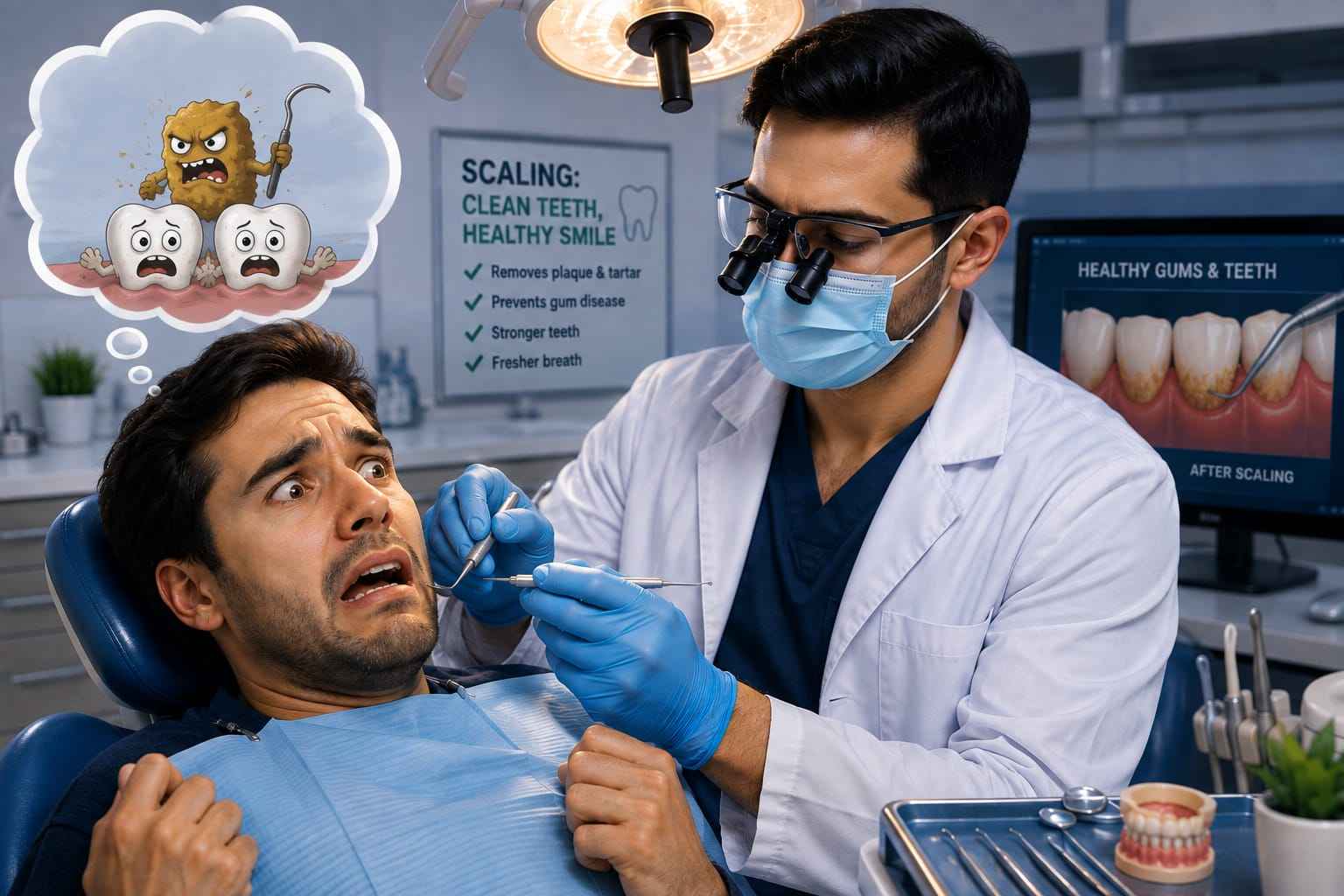
Scaling is one of the most fundamental yet misunderstood procedures in dentistry. While it is designed to clean teeth by removing stubborn stains and calculus (tartar), it is often surrounded by persistent myths.
Remarkably, even some medical professionals occasionally perpetuate the misconception that scaling weakens the teeth. For dental practitioners, counseling patients through this fear can be challenging, as many walk into the clinic believing that a professional cleaning will cause structural damage.
In reality, scaling actually strengthens your teeth and gums by restoring periodontal health and dramatically improving overall oral hygiene.
Cause, Diagnosis, Pathogenesis, and Treatment (ADC Therapeutic Guidelines - TG 4)
To understand why scaling is vital, we can look at the clinical framework outlined in the Australian Dental Council (ADC) Therapeutic Guidelines (TG 4) for periodontal disease caused by plaque and calculus buildup:
* Cause: Accumulation of dental plaque (biofilm) due to inadequate toothbrushing and flossing, which mineralizes into calculus over time.
* Diagnosis: Clinical examination revealing gingival inflammation, bleeding on probing, pocket formation, and supragingival or subgingival calculus deposits.
* Pathogenesis: Bacterial toxins from accumulated plaque trigger a local host inflammatory response. This causes gingivitis, which—if left unchecked—progresses to periodontitis, characterized by the destruction of the periodontal ligament and alveolar bone resorption, eventually leading to tooth mobility and potential extraction.
* Treatment (ADC TG 4): Thorough professional scaling and root planing (SRP) to remove subgingival and supragingival calculus, coupled with rigorous patient oral hygiene instruction (OHI) and regular maintenance reviews.
Addressing the Sensitivity Myth
A common concern following scaling is transient tooth sensitivity. Patients often worry this discomfort proves their teeth have been weakened.
* The Reality: The sensitivity is temporary and occurs because calculus and bacterial deposits—which previously acted as an insulating barrier—have been cleared away, exposing root surfaces that were covered by inflamed, receded gums.
* The Recovery: This sensitivity naturally subsides over time as the tissues heal and remineralize. Providing proper patient instructions regarding post-scaling sensitivity is essential for reassurance.
Cultural Beliefs vs. Dental Science
In developing regions, inconsistent oral hygiene habits are often justified by cultural misconceptions—such as the belief that ancestral genetics guarantee strong teeth regardless of brushing or flossing.
While genes do influence oral mucosa and tooth morphology to a degree, no genetic makeup can withstand continuous plaque accumulation.
* The Neglect Cascade: Inadequate brushing and lack of flossing lead to plaque buildup and calculus formation.
* Periodontal Damage: This irritates the gums and destroys supporting bone structures.
* Restorative Cascades: Unchecked disease eventually advances to deep dental caries requiring fillings, root canal therapy (RCT), or even tooth extractions.
Clinical Realities: Managing Comfort and Precision
Scaling is sometimes underestimated by clinicians as a simple, casual procedure. However, it is physically demanding and requires high precision.
The combination of post-scaling sensitivity, patient gag reflexes, and sudden head movements can make the session uncomfortable for both the patient and the dentist. Because it serves as the frontline defense preventing advanced procedures like fillings and extractions, scaling must be performed with utmost care, accompanied by clear, reassuring communication.
Beyond Basic Scaling: The Scope of Periodontology
Many people mistakenly assume that periodontology is limited entirely to ultrasonic scaling. While scaling makes up the majority of daily periodontal cases, the specialty encompasses advanced surgical and regenerative procedures, including:
* Gingivectomy
* Gingival grafts to support teeth
* Implantology procedures
* Guided Tissue Regeneration (GTR)
* Alveoplasty
Related Dental Blogs
Baby bottle caries : A clinical experience and the importance of patient history
Community Dentistry, Pediatric dentistry
How Dentists and Other Healthcare Professionals Can Apply for MS/PhD Programs in the USA and Europe (Free Resources)
Study Abroad
HOW TO USE AI EFFECTIVELY FOR DENTAL STUDYING
Lessons from Gilgit: Why It’s Time for Dentists to Step Out of the Clinic and into the Community
Community Dentistry