
Dental Implants: What They Actually Are, What They Cost, and What I've Learned Recommending Them
Dentistry,Oral implants
Posted Aug 7, 2026
Dental Implants: What They Actually Are, What They Cost, and What I've Learned Recommending Them
By Dr. Hussain Ahmad
Published: 7 August 2026
If you've lost a tooth, or you're staring down the possibility of losing one, chances are someone has already told you "just get an implant." Sounds simple enough until you actually start looking into it — then you realize there isn't one kind of implant, one price, or even one opinion among dentists about which brand is worth your money. So let me walk you through it properly, the way I'd explain it to a patient sitting in my chair.
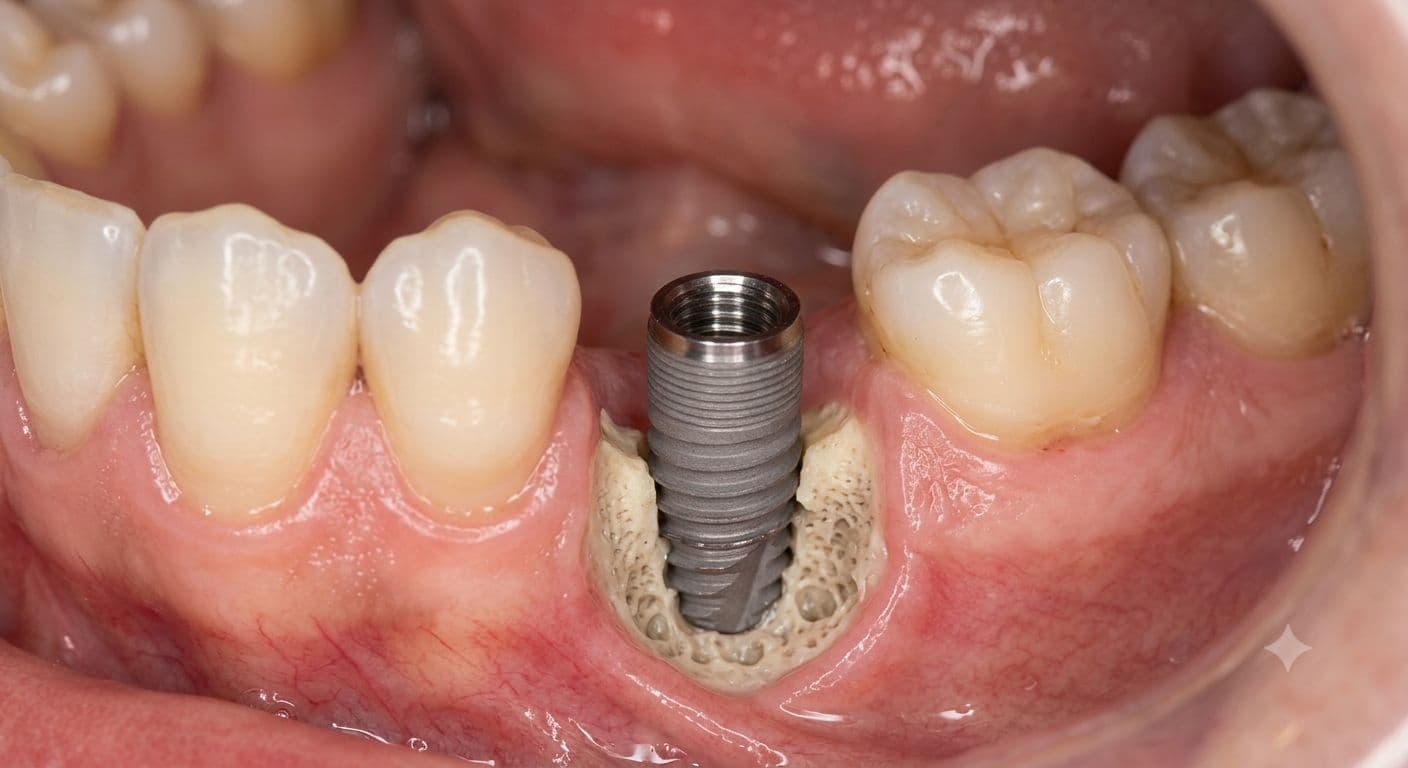
An implant, just to be clear, isn't the crown you see when someone smiles. That's the part on top. The implant itself is a small titanium (sometimes zirconia) post that goes into the jawbone and acts as an artificial root. Over a few months it fuses with the bone — osseointegration, if you want the textbook word for it — and once that's done, it becomes a stable base for whatever goes on top, a single crown, a bridge, or a full set of teeth. The reason implants beat dentures and bridges in most cases is that they don't lean on neighboring teeth for support, and they actually stop the bone loss that happens once a tooth goes missing. A denture just sits on the gum. An implant becomes part of your jaw.
The types, and why it's not one-size-fits-all
Endosteal implants are what most people picture — screwed directly into the jawbone. If your bone quality is decent, this is usually the first thing a dentist reaches for. Subperiosteal implants sit on top of the bone but under the gum, and they're mostly for patients who don't have enough bone height and don't want grafting. You don't see these as often now. Zygomatic implants are the heavier-duty option, anchored into the cheekbone instead of the jaw, reserved for patients with serious upper jaw bone loss — not every clinic even offers these. Mini implants are smaller in diameter, often used to stabilize a lower denture, less invasive but not always strong enough for something like a single molar. And then there's All-on-4 or All-on-6, where four or six implants support a full arch of teeth — this one's gotten popular precisely because it often skips the need for bone grafting even when there's some bone loss already.
The procedure itself follows a fairly predictable order regardless of type. First a consultation with imaging, usually a CBCT scan so the dentist can actually see the bone before touching anything. Then placement, a minor surgery under local anesthesia. Then healing — three to six months depending on the bone and where the implant went. Then the crown goes on. Some cases allow a temporary crown the same day as placement, but that depends a lot on how stable the bone is, and it's not something I'd recommend for everyone.
## The cost question, honestly
This is what everyone actually wants to know, and it's also the messiest part to answer because so much depends on the brand, the material, the clinic, and whether grafting is needed on top. Roughly speaking — and this really does shift by country — a single implant with the abutment and crown runs somewhere between $1,500 to $6,000+ in places like the US, UK, or Australia. Zygomatic implants cost considerably more because of how complex the surgery is. All-on-4 or All-on-6 per arch is a bigger investment given how much prosthetic work goes into it. Mini implants tend to be the cheapest, though again, not every case suits them. If a clinic gives you a single flat number without breaking it down, ask them to itemize it — "implant cost" quietly means different things depending on who's quoting it.
A patient I recommended an implant to
I remember this clearly — I was on duty at the hospital and recommended an implant to a patient who needed something long-lasting. His first reaction was fear. He said implants are painful. I had to stop and reassure him that's not true — you get localized anesthesia before anything happens, so you don't feel pain during the procedure, just a bit of pressure. And the bone-weakening thing people worry about is actually backwards. An implant doesn't weaken your bone, it protects your alveolar bone from resorption, which is exactly what starts happening once a tooth is missing and left untreated.
That said — and I want to be upfront about this — I don't recommend implants to every patient who walks in with a missing tooth. Even when someone's bone is genuinely good for it and the implant would last for years, cost is a real wall for most people. Pushing something a patient can't afford isn't good practice, in my opinion. In those cases a bridge or a properly planned denture is often the more honest recommendation.
## The diabetes myth that won't die
A lot of people assume diabetes rules out implants automatically. It doesn't. If it's well controlled, implants are completely suitable, and in well-managed diabetic patients they can actually help strengthen the periodontium. It's uncontrolled diabetes that's the actual problem — research shows it damages the periodontium over time, which is exactly why dentists often send diabetic patients for scaling first, to bring HbA1c down before implant treatment is even on the table.
## On implant brands — American vs. everyone else
This is a bit of an opinion, so take it as one: American dental implants cost more, but nothing quite beats them for longevity, and their threads engage the bone more strongly than most alternatives. That comes down to how much research has gone into them over the years. Turkish and South Korean implants are decent too, but because I haven't seen the same depth of research behind them, I don't recommend them with the same confidence I'd give an American system. Other dentists may disagree with me on this, and that's fair.
## Something dental colleges get wrong
Here's something I think about a lot. In dental college, what we're taught is mostly general dentistry — implantology barely comes up. I think that needs to change. A few proper chapters on implantology folded into the general curriculum, along with real webinars, would mean students graduate actually knowing something about implants instead of learning it all from scratch later. It would also make specializing in implantology afterward a lot less of a jump.
Why people actually pick implants over a bridge or a denture
A lot of patients choose an implant simply because they don't want the dentist cutting into their other healthy teeth. And that's a fair concern. With a bridge, to support the missing tooth you have to cut down the two neighbouring teeth so the bridge can sit on them — and bridges themselves come in several types, each with their own indications and contraindications, but in most cases you're still shaving down otherwise healthy adjacent teeth for support. An implant skips that entirely. It stands on its own, so nothing next to it has to be sacrificed.
Removable partial dentures are the other common alternative, and honestly, most patients don't love them. You have to take them out, clean them separately, keep up with denture hygiene, and they don't always look natural. They can shift or even fall out of the mouth over time, especially as the alveolar bone under them keeps resorbing and the fit stops being what it was. Implants don't have that problem — with something like a zirconia implant you get strength, a genuinely natural feel, and none of the slow, awkward fit issues that come with a removable appliance.
This is really why I think of implants as a one-time cost that ends up saving you from a string of other costs down the line — more dental visits, denture adjustments, bridge replacements, the works. As a dentist, I'm honestly never fully satisfied replacing a missing tooth with a bridge or a denture when an implant is on the table. They're still necessary procedures, and if someone has a contraindication for implants, that's exactly when bridges or dentures make sense. But if a patient is a good candidate, I'll always steer them toward the implant — for the natural feel, and because it spares them the long-term wear and tear, extra visits, and combined cost that bridges and dentures tend to add up to over the years.
## So, worth it or not?
For most people missing a tooth or more, yes, implants tend to outlast bridges and dentures, they protect the jawbone, and they feel closer to a real tooth than anything else available. But which type is right for you really depends on your bone, your oral health, and honestly, your budget — which is why an actual consultation and imaging matter more than any price list I could give you here. If you're thinking about it, don't start by picking a type. Start by getting your bone and gums assessed. Everything else follows from that.
---
#DentalImplants #Dentistry #ImplantDentistry #OralHealth #Periodontics #DiabetesAndDentalHealth #Implantology #TheDentistryInsight #DentalEducation #PakistaniDentists
Related Dental Blogs
Baby bottle caries : A clinical experience and the importance of patient history
Community Dentistry, Pediatric dentistry
How Dentists and Other Healthcare Professionals Can Apply for MS/PhD Programs in the USA and Europe (Free Resources)
Study Abroad
HOW TO USE AI EFFECTIVELY FOR DENTAL STUDYING
Lessons from Gilgit: Why It’s Time for Dentists to Step Out of the Clinic and into the Community
Community Dentistry