
Diabetic Patients in the Dental Chair: Treat or Refer? What Dentists in Developing Countries Can Learn From US and Australian dental Guidelines
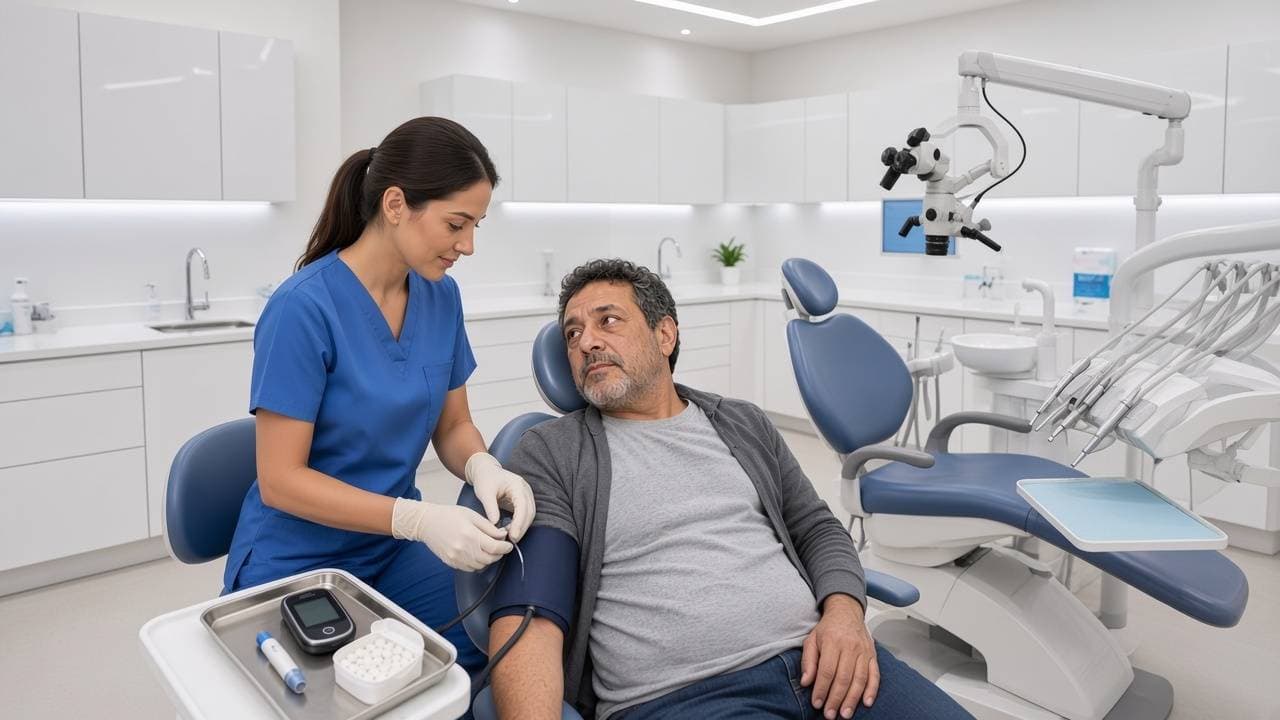
Medical emergencies in dental clinic
Posted Aug 19, 2026
By Dr. Hussain Ahmad, DDS
Founder, The Dentistry Insight
August 19, 2026
I’ll be honest.
For years, the moment I saw “Diabetic” on a patient’s chart, my first reaction was:
“Please get medical clearance from your physician.”
Even if they came in for a routine scaling.
Even if their random glucose was 110.
If you practice in a developing country, you know this fear.
But is it actually helping our patients?
The Case That Changed How I Practice
Last month an elderly diabetic patient came to our clinic for an exam and a filling.
His random blood sugar was 250 mg/dL.
Ten minutes into the appointment he started vomiting. He looked weak. He had not eaten properly.
Someone in the room saw the 250 and said “Give insulin.”
We did.
A few hours later he was drowsy with a blood pressure of 80/50.
The real problem was not the sugar.
It was severe dehydration and acute kidney injury.
The mistake?
We treated the number, not the patient.
I still remember that blood pressure reading.
An abnormal lab value is not always the disease.
Sometimes it is just a clue.
What US and Australian Guidelines Actually Say
This is what changed everything for me.
The American Dental Association and Australian Dental Guidelines are clear:
Diabetes is not a contraindication for dental treatment.
It is not even a contraindication for dental implants.
The key metric is HbA1c, not one random glucose reading.
HbA1c Less than 7 percent: Safe to treat with normal precautions
HbA1c 7 to 9 percent: Treat with caution. Morning appointments are preferred
HbA1c Greater than 9 percent: Postpone elective treatment and consult the physician first
To be honest, I used to refer everyone too.
Until I read the ADA guidelines myself.
If HbA1c is in range, you can treat.
The Procedure We Should Not Delay: Scaling
I often see diabetic patients with inflamed, bleeding gums who come in for scaling.
For years I delayed it thinking “the sugar is high, wait.”
But current evidence shows the opposite.
Periodontal disease worsens glycemic control. Treating it improves it.
Scaling and root planing can help lower HbA1c in diabetic patients.
If you have diabetes, you should not delay periodontal therapy. You need it more.
This is one of the few dental procedures that directly helps manage diabetes.
Why Do We Panic in Developing Countries?
Three reasons, and I have done all three:
1. Fear. What if the patient becomes hypoglycemic during the procedure
2. No Protocol. We are not sure what to do if it happens
3. Safer to Refer. Because we were never taught how to manage it
But referring every patient delays care. And many patients never return.
My Chairside Protocol Now
Before looking at the glucose number, assess the patient.
1. Assess First
Vitals: blood pressure, pulse, oxygen saturation. Is the patient stable
Hydration: dry tongue, sunken eyes, poor intake
History: missed breakfast, missed insulin, any active infection
2. Hypoglycemia vs Hyperglycemia
Hypoglycemia is fast. Sweating, shaking, confusion. It can become critical in minutes.
Hyperglycemia, DKA, or HHS is slow. Thirst, vomiting, fruity breath. It develops over hours to days.
My rule: If you are unsure whether it is hypo or hyper, treat for hypoglycemia first.
Give 15 grams of glucose or juice immediately.
The brain needs glucose now. You can check the glucose again after.
HHS and DKA come from high glucose plus dehydration. They evolve gradually. Hypoglycemia can be fatal quickly.
3. When Do I Refer
I send the patient to the emergency department or physician if:
The patient is drowsy, confused, or hypotensive
There is vomiting with poor intake and I suspect DKA or HHS
My initial management fails and the patient worsens
HbA1c is greater than 9 percent and the procedure is elective
What I Do In My Clinic Now
1. Diabetes does not mean no treatment. I check HbA1c. If it is less than 7 to 8 percent, I proceed.
2. Dental implants are acceptable in well-controlled diabetics. This is done routinely in the US.
3. Morning appointments only. After breakfast and normal medications.
4. Emergency kit ready: glucometer, glucose tablets, juice, glucagon.
5. Treat the patient, not the lab report.
6. I ask patients to bring their glucometer and most recent HbA1c report.
7. I do not delay scaling for diabetic patients. I explain that treating periodontal disease helps lower HbA1c.
Last month I placed an implant on a patient with HbA1c 6.8 percent.
In the US this is routine. A few years ago I would have refused.
Final Thoughts
We are dentists, not just “tooth doctors.”
We are often the first to identify a medical issue.
That 250 could be stress. It could be infection. It could be dehydration.
Do not let the number push you into the wrong decision.
Manage with knowledge. Refer with reason. Not with fear.
Have you ever managed a diabetic emergency in your chair? What did you do? Comment below. I read every response. Save this for your next clinic day.
Key Terms: diabetic dental treatment, ADA diabetes guidelines, dental management of diabetes, hypoglycemia emergency dentistry, dental implants in diabetic patients, periodontal therapy and HbA1c
Source: American Dental Association - Management of Diabetes Mellitus in Dental Patients
#Dentistry #Diabetes #OralHealth #DentalImplants #Periodontics #PatientCare #ADA #EvidenceBasedDentistry #DentistLife #TheDentistryInsight
Related Dental Blogs
Baby bottle caries : A clinical experience and the importance of patient history
Community Dentistry, Pediatric dentistry
How Dentists and Other Healthcare Professionals Can Apply for MS/PhD Programs in the USA and Europe (Free Resources)
Study Abroad
HOW TO USE AI EFFECTIVELY FOR DENTAL STUDYING
Lessons from Gilgit: Why It’s Time for Dentists to Step Out of the Clinic and into the Community
Community Dentistry