
The Amalgam vs. Composite Debate: Balancing ADA Guidelines with Real-World Clinical Reality
Restorative Dentistry / Clinical Insights
Posted Jul 17, 2026
TITLE
The Amalgam vs. Composite Debate: Balancing ADA Guidelines with Real-World Clinical Reality
CATEGORY
Date 7/17/2026
Dr Hussain Ahmad
An honest look at dental amalgam versus composite resin. We explore why silver fillings endure for decades in everyday practice, the socioeconomic realities of tooth restoration, preparation ethics, and what the ADA actually says about safety and handling.
FULL CONTENT
In dental school, textbooks paint a very clear picture of the evolution of restorative materials: dental amalgam is a relic of the past, and composite resin is the modern standard of care. But anyone who has spent a few years working in a busy clinical setting—especially in developing healthcare systems like Pakistan—knows there is a massive disconnect between textbook theory and real-world practice.
While the global trend leans heavily toward tooth-colored restorations, a closer look at patient long-term outcomes reveals a much more nuanced story about durability, cost, and clinical utility.
The Longevity Gap: Theory vs. Clinical Reality
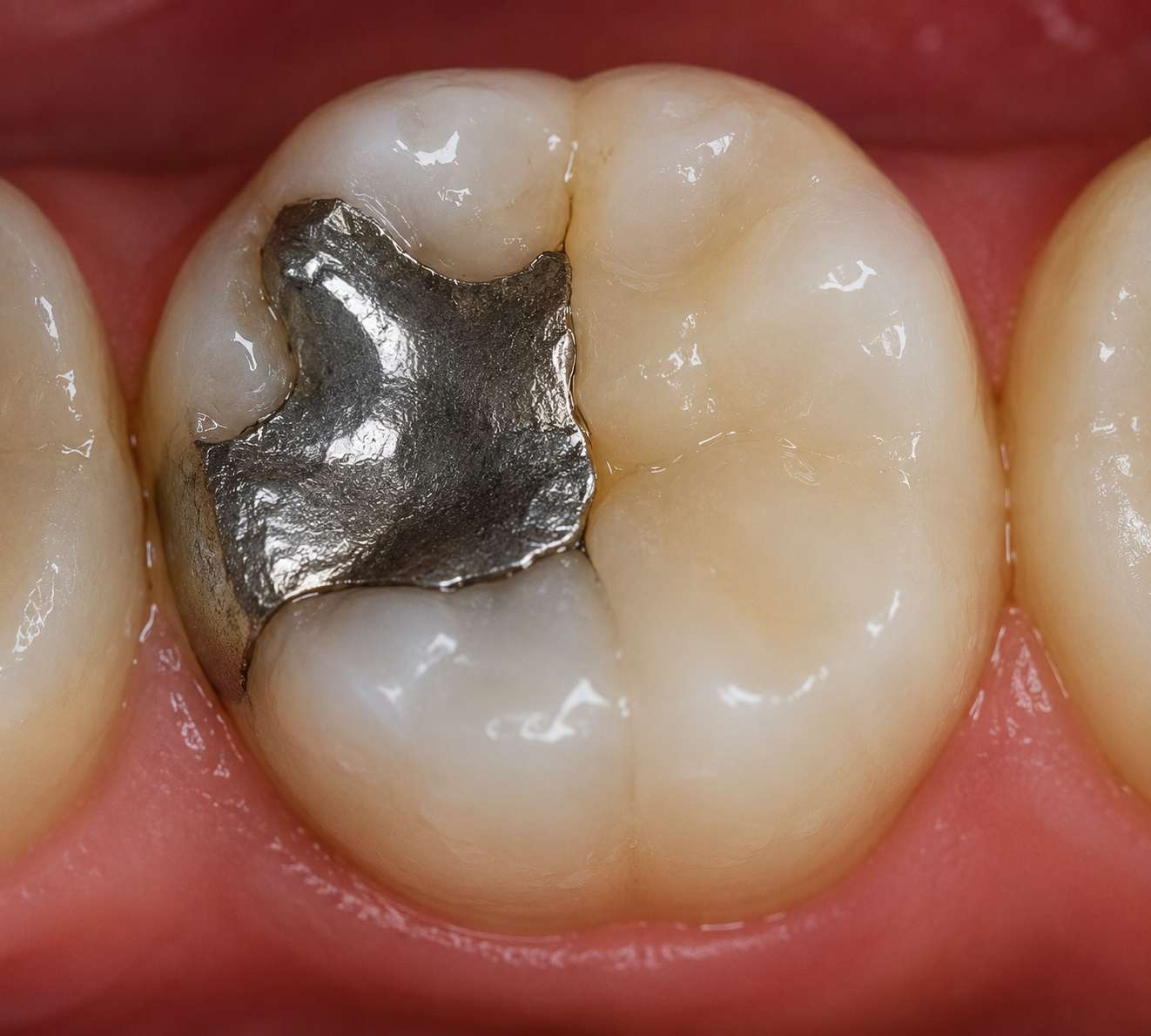
We are taught that composite resin is superior because it bonds to the tooth structure and looks beautiful. Yet, in daily clinical rotations, dentists routinely see patients walking in with 20- to 30-year-old amalgam restorations that are completely asymptomatic and structurally intact. Conversely, it is incredibly common to see composite restorations failing within a few years due to microleakage, secondary caries, or isolation failures.
For low-income or working-class patients, this durability gap is everything. When a patient is working with a tight budget, they don't care about a restoration being perfectly tooth-colored; they care about whether it lasts. Many patients actively request "silver fillings" because they are tired of paying for costly composite replacements every few years. This brings an important socioeconomic reality to light: a long-lasting, affordable restoration is always better for a patient's systemic health than a failed, leaked aesthetic filling that leads to an affordable extraction.
The Repairability and Preparation Paradox
Of course, amalgam isn't without its massive clinical challenges, which explains why the dental industry has pushed so hard for alternatives:
Conservation of Tooth Structure: This is amalgam's greatest drawback. Because amalgam does not chemically bond to dentin or enamel, dentists must follow G.V. Black’s principles of "extension for prevention." We are forced to sacrifice a significant amount of healthy tooth structure just to create mechanical undercuts for retention.
The "All-or-Nothing" Replacement: If an amalgam restoration develops a high occlusal spot or a localized marginal failure, you cannot easily patch it. You almost always have to drill out the entire dense mass and start over. Composite resin, on the other hand, allows for highly conservative, localized repairs—you only remove the damaged segment.
The Great "Pin" Myth
Every dental student memorizes chapters on using self-threading, friction-locked, or cemented dentin pins to retain massive amalgam foundations. Yet, ask almost any modern clinician, and they will tell you they have never actually seen or used a pin in a live patient's mouth. Modern clinical skill has largely replaced pins with smart cavity design, slots, pots, or transitioning directly to full-coverage crowns or direct overlays when a tooth is that heavily broken down.
Is the Dental Industry Playing Politics?
It is a running joke among many cynical clinicians that the dental market phased out amalgam simply because it was too good and lasted too long. From a purely commercial standpoint, a material that lasts 30 years and costs very little isn't great for repeat business. While the industry heavily markets composites because they generate continuous revenue through specialized bonding agents, curing lights, and frequent replacement visits, the ADA's focus remains strictly on safety and science.
The Truth About Toxicity: It’s All in the Handling
Is amalgam dangerous? The short answer is: only if the dentist lacks the skill or protocols to handle it properly. Amalgam contains elemental mercury, which is undeniably toxic in its raw, unmixed form. However, when mixed correctly, it forms a highly stable intermetallic compound.
In a modern dental clinic, the risk of mercury toxicity is practically zero for the patient—and easily controlled for the staff—provided you follow strict safety measures:
Never use manual mortar-and-pestle mixing: Modern practices use completely sealed, pre-proportioned amalgam capsules that prevent raw vapor exposure during trituration.
Proper Scrap Disposal: Scrap amalgam must never be thrown into regular trash or medical biohazard bags destined for incineration. It must be kept in sealed containers and processed through an amalgam separator to keep mercury out of the environment.
Ultimately, the science supported by the ADA, FDA, and WHO confirms that dental amalgam remains a safe, highly effective material. The key isn't banning the material; it’s ensuring that if a dentist chooses to use it, they possess the absolute clinical skill and safety protocols required to handle it safely.
KEYWORDS
dental amalgam longevity, composite resin failure rates, cost of silver fillings, dental amalgam vs composite, cavity preparation undercuts, amalgam capsules safety, mercury toxicity in dentistry, dental industry planned obsolescence
Related Dental Blogs
Baby bottle caries : A clinical experience and the importance of patient history
Community Dentistry, Pediatric dentistry
How Dentists and Other Healthcare Professionals Can Apply for MS/PhD Programs in the USA and Europe (Free Resources)
Study Abroad
HOW TO USE AI EFFECTIVELY FOR DENTAL STUDYING
Lessons from Gilgit: Why It’s Time for Dentists to Step Out of the Clinic and into the Community
Community Dentistry